
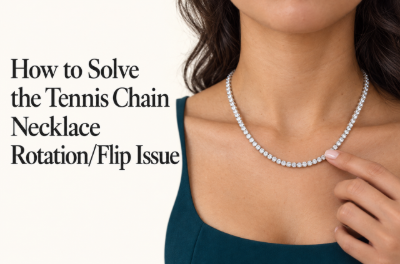
A tennis necklace creates a beautiful, continuous line of sparkle. But sometimes the stones tilt forward, roll to one side, or flip instead of sitting neatly against the skin. Why does this happen, and how can jewelry designers work around it?
The answer involves both the necklace’s fit and the way its links move.
What Is a Tennis Chain?
A tennis chain consists of individual stone settings connected in a continuous row. Diamonds, cubic zirconia, and other gemstones give this style its signature sparkle, while small joints allow the chain to bend.
Its beauty depends on its mechanics: the settings must hold the stones securely while the connections provide enough flexibility for comfortable wear. Many tennis chains use hinged links, but not every design bends equally in every direction.
Bracelet-style construction works well when wrapping around a wrist. A necklace has a different job: it must curve around the neck, pass over the collarbones, and drape across the chest while keeping the stones properly oriented.
Why Do Longer Tennis Necklaces Tilt or Rotate?
Some tennis chains—including the style discussed with our production team—were originally designed for bracelets. Extending this construction into a necklace does not necessarily give it the movement needed to follow the neckline.If the hinges bend easily in one direction but resist movement in another, neighboring links can pull the settings away from their intended angle. The position of the connections relative to the weight of each setting also affects how the stones hang.
A longer or oversized necklace has more freedom to move and less support from the body. Gravity, movement, and the chain’s construction can therefore cause sections to tip or roll.
This is a recurring issue discussed by tennis necklace owners, but it does not affect every design. Length matters, yet a shorter necklace can still flip if its construction is unsuitable.
Five Ways to Reduce Rotation
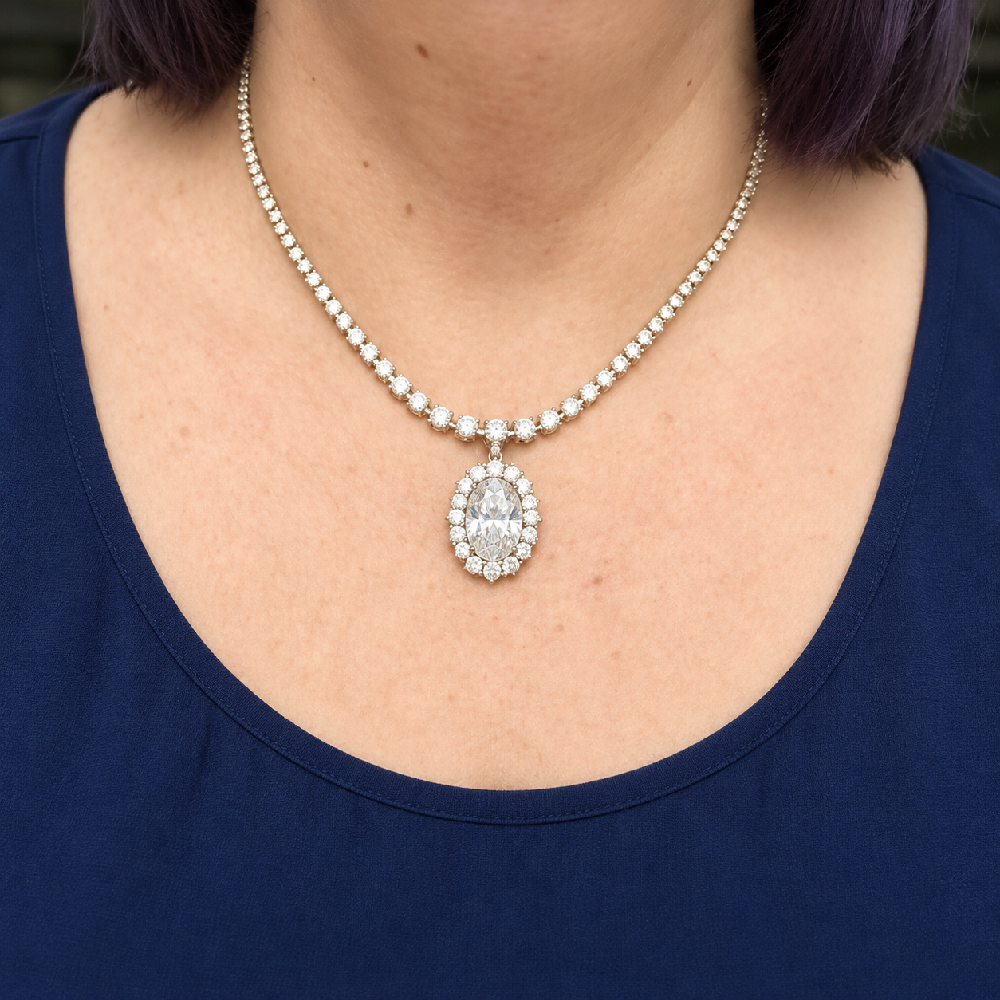
1. Add a Charm or Pendant at the Center
A center charm or pendant adds a downward pull that can help anchor the necklace and stabilize the front section. Some wearers report that this stops their necklace from flipping.
The effect depends on the pendant’s weight and attachment point. A very light charm may make little difference, while an unsuitable attachment can introduce more twisting. Test the combination before finishing the piece.
2. Incorporate a Decorative Connector
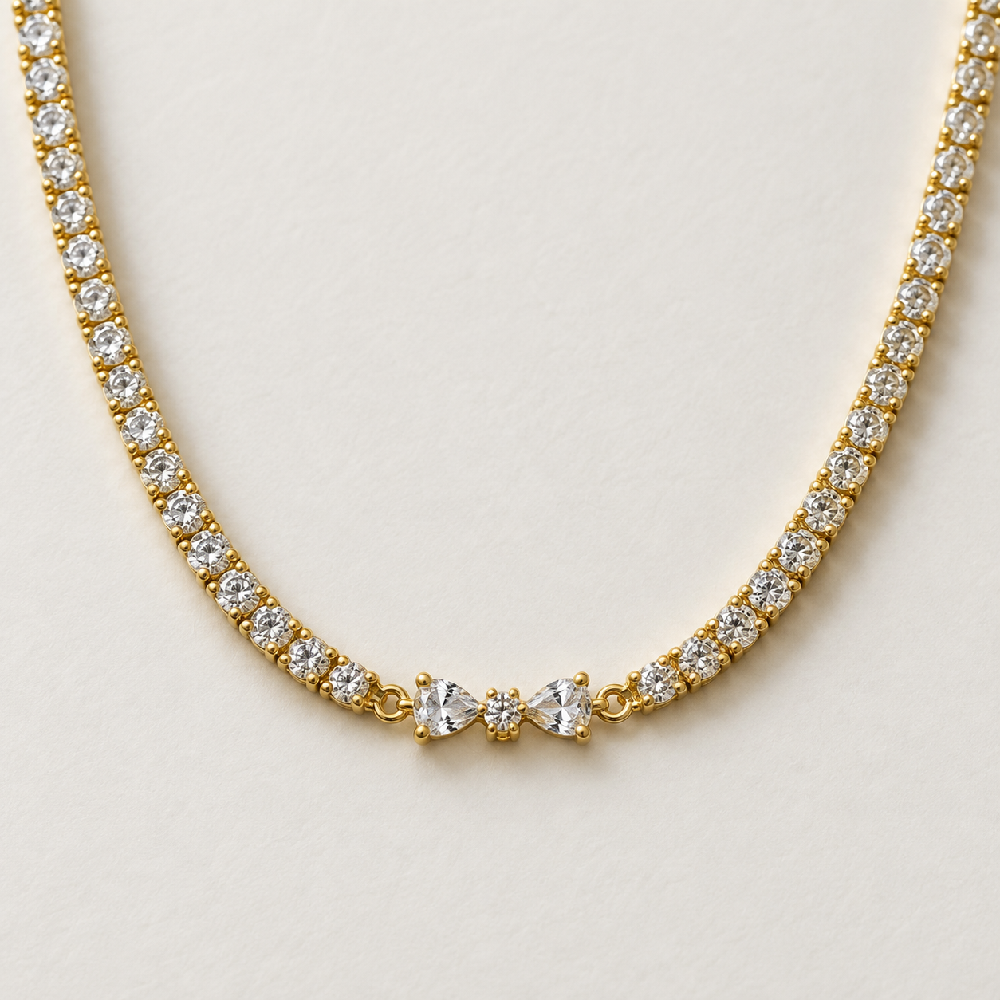
Designers can divide the tennis chain into two sections joined by a connector, such as a cross, gemstone element, or decorative focal piece.
This changes how the two chain sections meet and can let them settle at a more comfortable angle. It does not literally eliminate tension; the connector’s shape, balance, and attachment points determine whether it improves the drape.
Choose a connector that lies steadily against the chest, then check the necklace during movement.
3. Consider a Heavier or Graduated Design
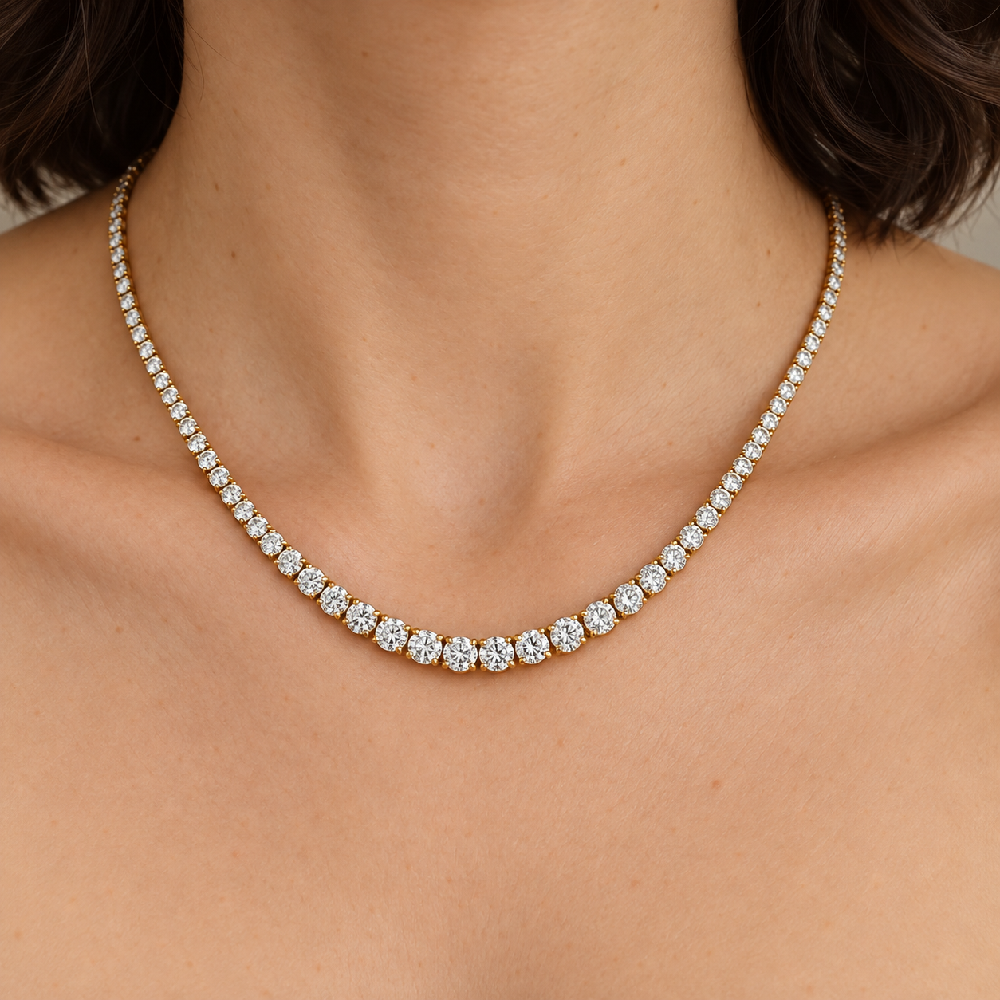
A more substantial necklace—or a graduated design with larger stones toward the center—may be more stable than a lightweight, uniform chain.
However, larger stones alone are not a guaranteed solution. The weight and balance of the metal settings matter too. Look for a design that combines suitable weight with connections made for necklace wear.
4. Explore Different Stone Shapes and Settings
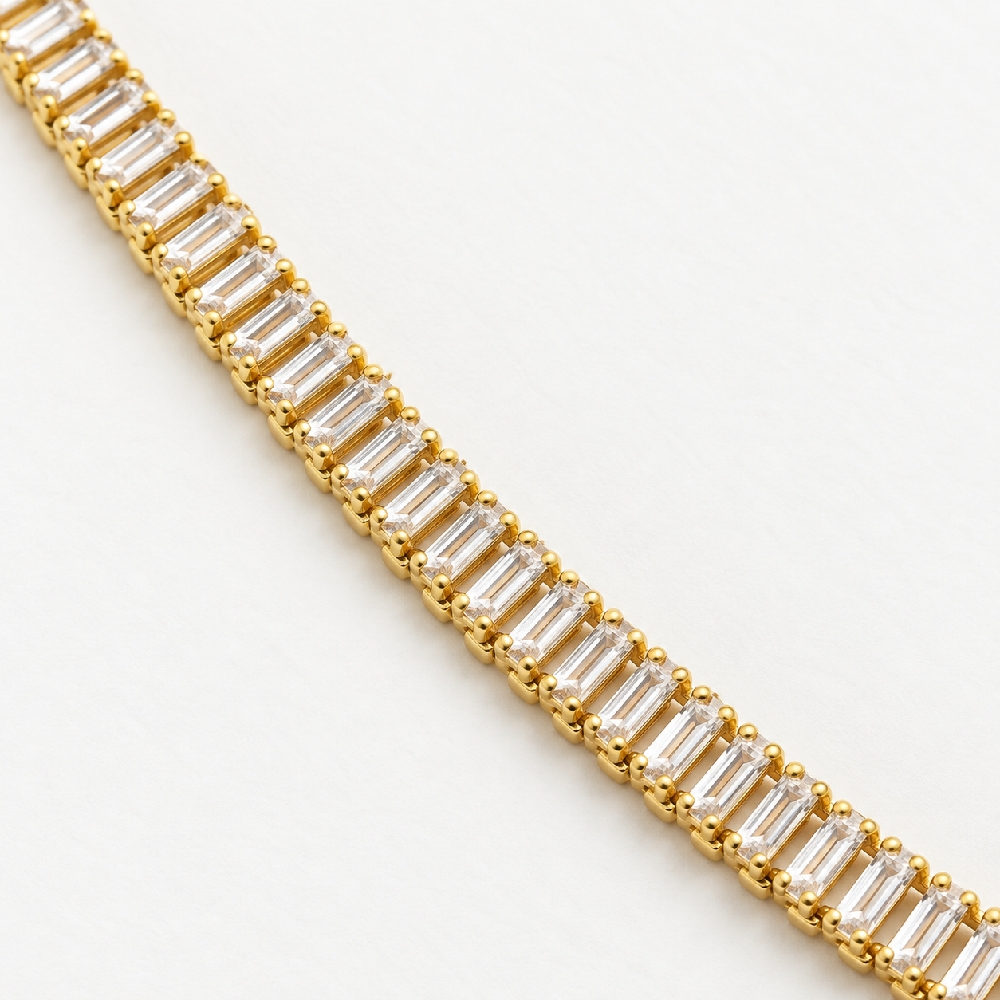
Stone shape can change the proportions of the settings and how the links move together.
For example, AZ Findings’ rectangular-stone tennis chain as an option that is less prone to rotation in longer necklaces. Its elongated setting design offers an alternative to the round-stone style.
The complete construction matters more than stone shape alone, so test your chosen chain at the intended length.
5. Try a Shorter, Choker-Style Fit
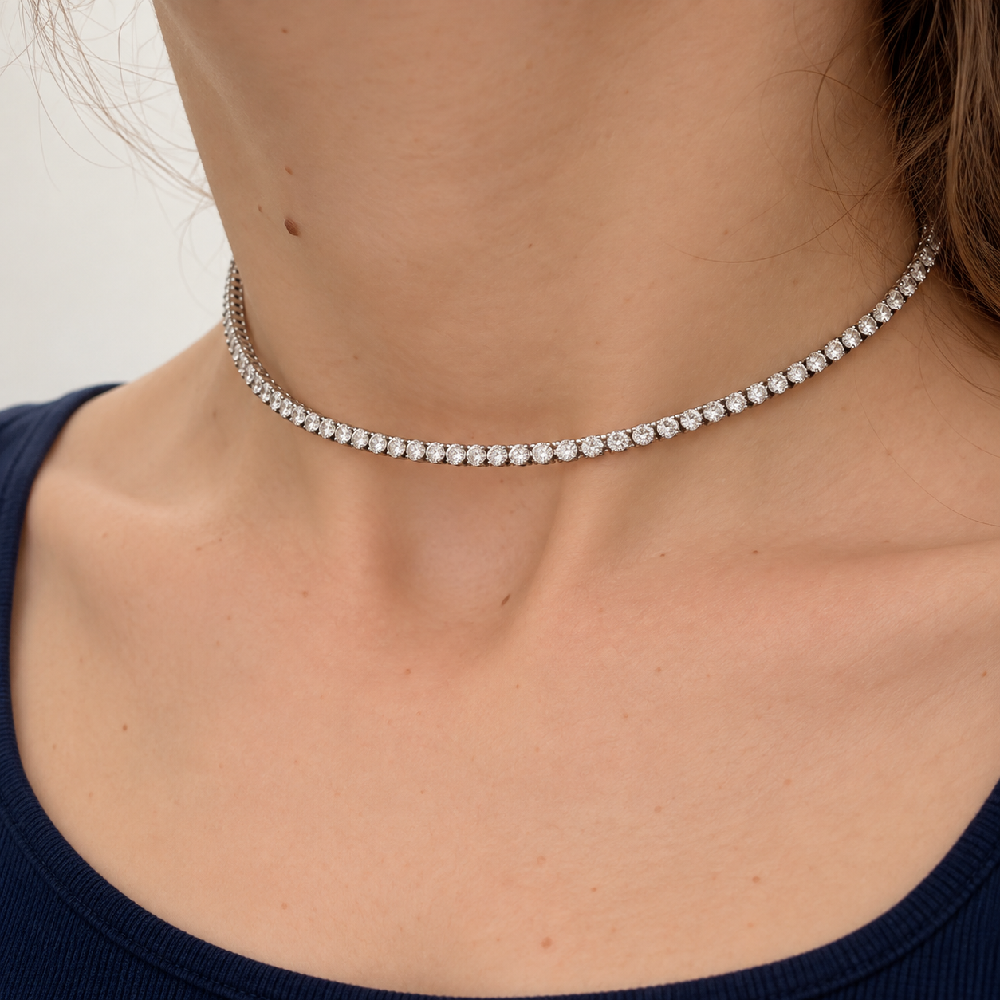
Wearing the chain closer to the neck can reduce the freedom it has to roll and help support the settings.
Aim for a comfortable fit that follows the neckline without feeling tight. Test a shorter length before permanently removing links, since shortening will not correct every construction issue.
One More Simple Check
Before changing the design, try reversing the wearing direction by switching which clasp end goes on the left and right. Some directional necklaces settle better one way than the other, as several wearers describe in this discussion:
https://www.reddit.com/r/Moissanite/comments/1fdhk8w/tips_for_tennis_necklace_that_rolls_and_faces/.
Always test the finished necklace while standing, turning, and walking. A chain that looks perfect on a display may behave differently when worn.
Feel free to share your tips or design ideas for tennis chain necklaces in the comments below!
Leave your comment