
In the jewelry industry, there’s no shortage of opinions about what’s trending. Social media highlights bold designs, influencers push new aesthetics, and marketplaces constantly shift what appears popular. But when you step away from surface-level trends and look at real order data—thousands of actual wholesale transactions—the picture becomes much clearer.
What customers actually purchase is often very different from what gets the most attention.
This analysis is based on aggregated purchasing behavior across a broad wholesale customer base, including independent designers, retail stores, and a rapidly expanding segment: permanent jewelry businesses. As a U.S.-based wholesaler supplying chains, findings, and jewelry components nationwide, AZ Findings sees patterns that reflect what consistently moves in the market.
The conclusion is surprisingly straightforward:
The jewelry market today is not driven by complexity or novelty—it is driven by simplicity, wearability, and repeat demand.
Chains: The Core of Modern Jewelry Demand
Across thousands of orders, one category clearly stands above the rest: chains.
Not pendants. Not highly designed statement pieces. Just chains.
At first glance, this may seem overly simplistic. But it reflects a deeper shift in consumer behavior. Customers increasingly prefer versatile, modular jewelry—pieces that can adapt to different styles, occasions, and uses.
Chains function as exactly that: They can be worn alone or layered; They serve as a base for customization; They integrate seamlessly into permanent jewelry. This flexibility makes chains one of the most reliable and scalable product categories in both wholesale and retail.
Cable Chains: The Backbone of the Market
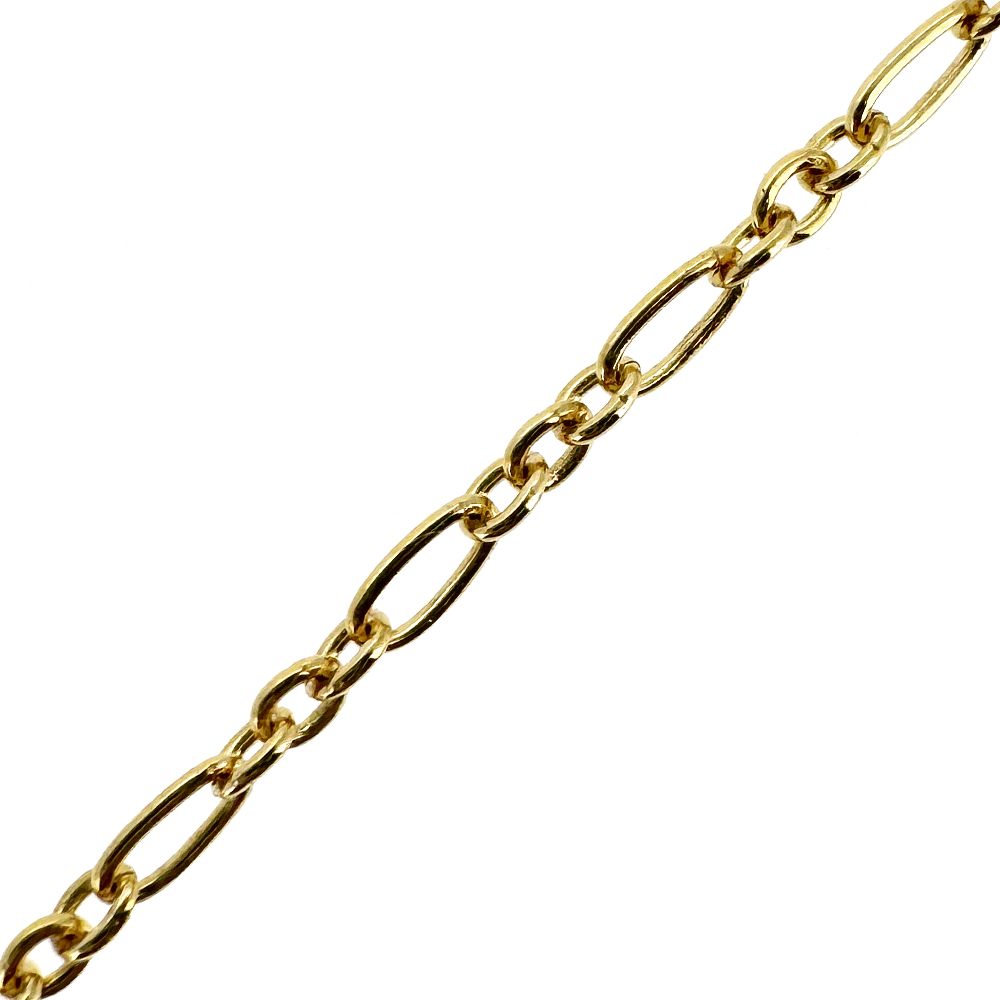
If there is a single product that defines current jewelry demand, it is the cable chain.
Real sales data shows that a simple round cable chain consistently ranks as the top-selling item, with textured variations also appearing among leading SKUs.
Its performance is not driven by trend cycles, but by fundamental usability. Cable chains are lightweight, comfortable, and structurally consistent, making them ideal for everyday wear. They also function equally well as standalone pieces or as a base for pendants.
This combination of simplicity and versatility explains why they dominate not only in individual sales, but also in bulk orders and repeat purchasing patterns.
For permanent jewelry businesses, cable chains are essential. Their uniform link structure allows for clean welding, while their flexibility ensures long-term comfort for customers wearing them continuously.
From a business perspective, cable chains are not just a popular category—they are a foundational SKU. Many successful jewelry businesses generate a significant portion of their revenue from a very limited number of cable chain styles.
Paperclip Chains: From Trend to Structural Category
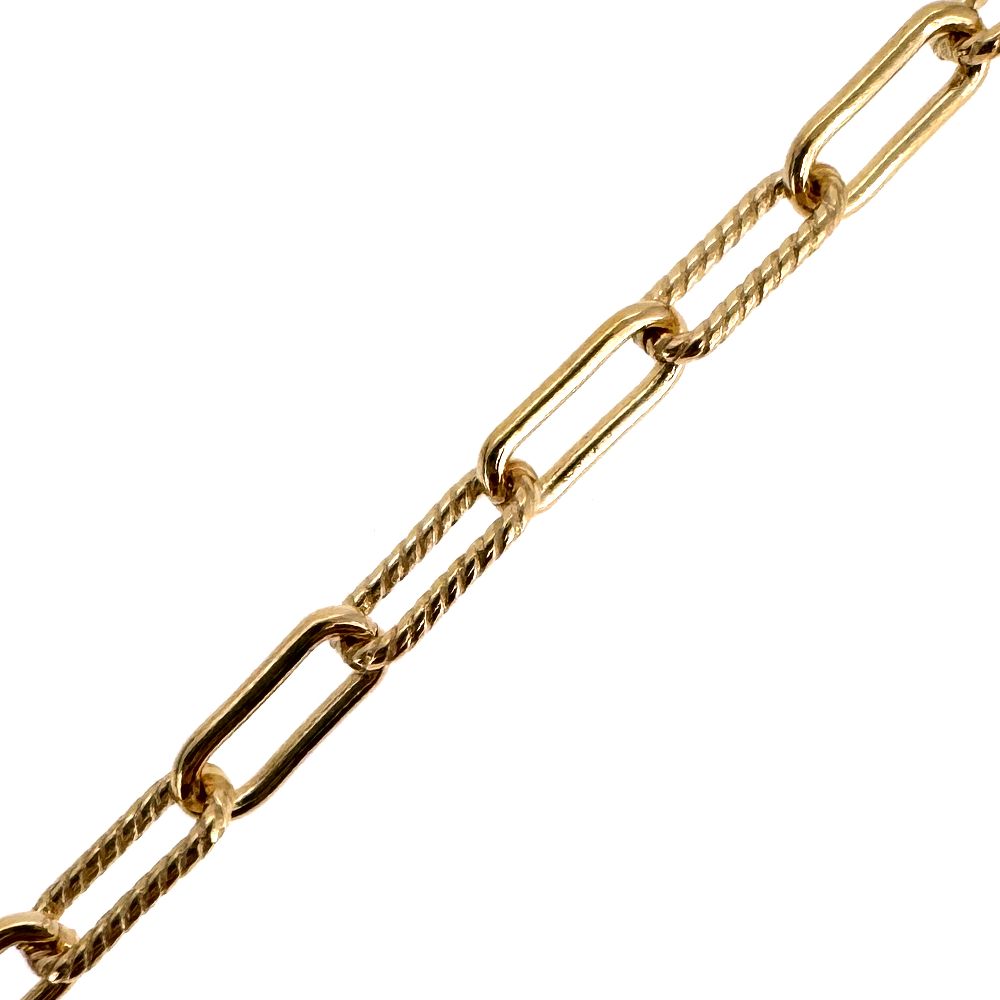
Paperclip chains initially emerged as a trend-driven product, but data suggests they have transitioned into a stable, repeatable category.
Among the top six best-selling chains, multiple positions are occupied by paperclip styles, indicating consistent demand beyond initial trend adoption.
Their appeal lies in a specific balance: they offer a recognizable, modern aesthetic while maintaining a minimalist profile. The elongated links create visual interest without introducing complexity or limiting wearability.
Unlike many trend-based designs, paperclip chains have demonstrated sustained reorder behavior, particularly in finished jewelry and layering collections. They function less as a replacement for cable chains and more as a complementary option for customers seeking subtle differentiation.
Two-Tone Chains: A Data-Driven Growth Signal
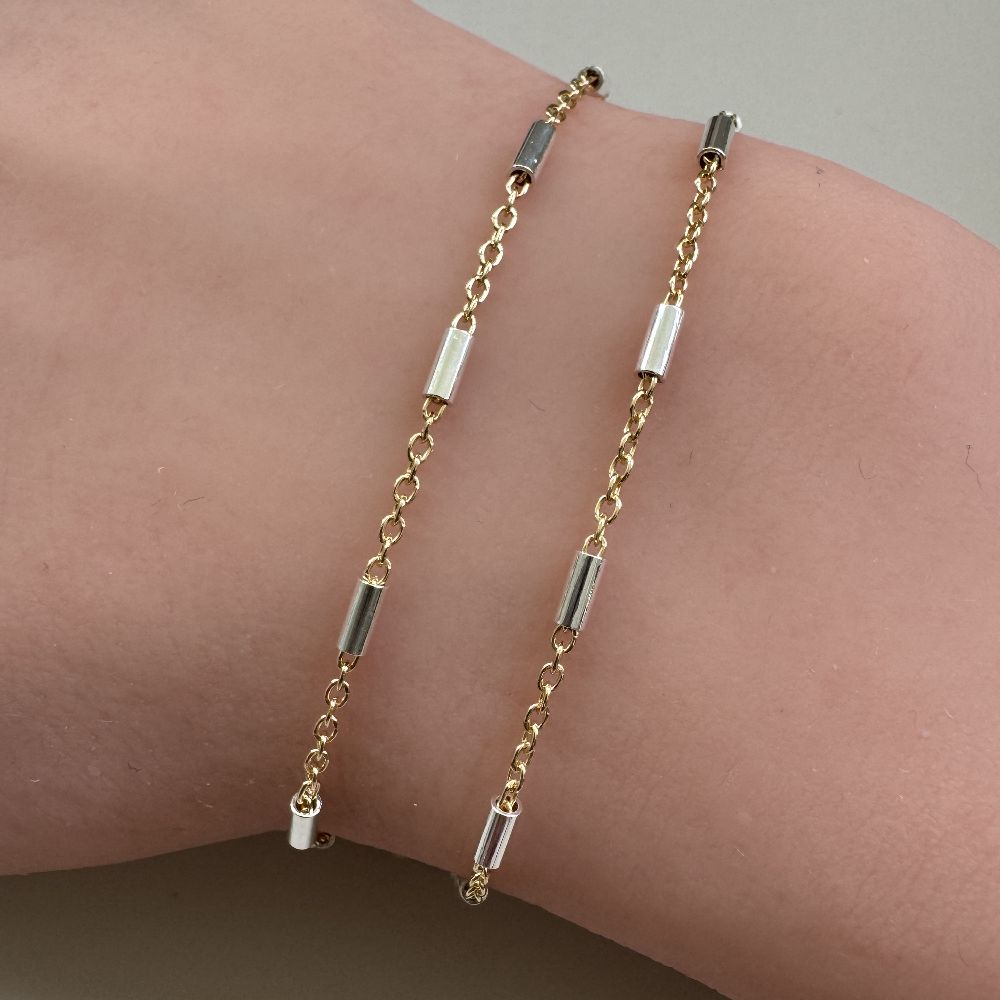
One of the most notable emerging patterns in the data is the performance of two-tone chains, particularly combinations of gold-filled and sterling silver.
Within the top six best-selling chains over a six-month period, two are two-tone designs, a strong signal for a category that is still relatively underrepresented in most product assortments.
These chains typically feature gold-filled links accented with small sterling silver beads, creating subtle contrast while maintaining a clean aesthetic. Their success is driven less by trend visibility and more by practical advantages.
First, they solve a common styling challenge. Customers increasingly mix metals in their jewelry, and two-tone chains eliminate the need to choose between gold and silver. This flexibility reduces decision friction and increases purchase confidence.
Second, they provide a natural upgrade path. Compared to basic cable chains, they offer additional visual detail and perceived value, often at a modest price increase. This positions them as an effective mid-tier upsell product.
In permanent jewelry, two-tone satellite chains perform particularly well. The spacing created by bead accents adds visual rhythm, allowing the piece to stand on its own without requiring charms or additional customization.
Materials: What Customers Are Willing to Pay For
If chain types indicate what sells, materials reveal what customers are willing to invest in.
Across thousands of transactions, a clear hierarchy emerges.
Gold Filled: The Optimal Balance
Gold-filled material consistently appears among top-selling products across multiple categories.
Its appeal lies in its ability to deliver the appearance of solid gold while maintaining a significantly lower price point. At the same time, it offers far greater durability than gold-plated alternatives, making it suitable for daily wear and long-term use.
This combination positions gold-filled as the optimal balance between cost, durability, and perceived value, particularly in the mid-market segment.
It is also the preferred material for many permanent jewelry businesses, where longevity and wear resistance are critical.
Sterling Silver: The Volume Driver
Sterling silver remains one of the highest-volume materials, particularly in wholesale jewelry chains purchasing.
Its lower cost makes it accessible to a wide customer base, while still retaining intrinsic value as a precious metal. In many cases, silver functions as an entry-level option, with gold filled serving as the upgrade.
Silver also plays a significant role in permanent jewelry, offering a more affordable alternative while maintaining acceptable durability.
The Permanent Jewelry Effect
The Biggest Driver Behind Chain Demand
One of the most important forces shaping current jewelry demand is the rise of permanent jewelry.
Unlike traditional retail, this segment operates on a repeat-use consumption model. Each customer requires a new chain, and businesses rely on a small number of proven styles for consistent service delivery.
This results in a distinct purchasing pattern:
- Concentrated SKU selection
- High volume per SKU
- Frequent reordering cycles
In practice, permanent jewelry businesses prioritize reliability. Those working with sterling silver or gold-filled chains depend heavily on consistent product quality to protect their reputation. A dependable permanent jewelry wholesale supplier is therefore essential to their success, providing products that perform reliably in everyday use.
Why Simple Chains Win in This Segment
Permanent jewelry customers prioritize three key factors:
- Comfort for continuous wear
- Structural durability
- Timeless, minimal design
These requirements naturally favor fine cable chains, lightweight links, and simple structures. More complex or bulky designs are less suitable, as they compromise comfort or increase the risk of breakage.
This helps explain why simple chains dominate not only in this segment, but across the entire dataset.
What This Means for Jewelry Businesses
Taken together, these insights point to a clear strategic direction.
The modern jewelry market is not about offering more options—it is about offering the right products with precision.
Businesses that perform well tend to:
- Focus on a small number of high-performing SKUs
- Offer those SKUs in proven materials
- Maintain pricing within the most active demand range
- Align with repeat-demand customer segments
Chains, particularly simple and versatile ones, are no longer just components.
They are the core revenue drivers.
Final Thoughts: The Reality Behind the Data
When analyzed at scale, real order data tells a consistent story.
Customers are not prioritizing complexity.
They are not chasing extremes.
Instead, they are choosing:
- Simple, wearable designs
- Materials that balance durability and affordability
- Price points that feel accessible yet valuable
- Products that integrate into everyday life
This is why cable chains remain dominant, supported by paperclip and two-tone variations that expand the category without disrupting its core simplicity.
The lesson is clear:
Sustainable growth in the jewelry business comes not from chasing trends, but from understanding repeat behavior.
And based on thousands of real orders, that behavior is remarkably consistent.
Source: research data based on AZ Findings wholesale orders from October 2025 to April 2026.
Looking for the same chain styles discussed in this report? Explore our collection of wholesale sterling silver chains, wholesale gold-filled chains and wholesale permanent jewelry supplies trusted by jewelry businesses nationwide.
Leave your comment