
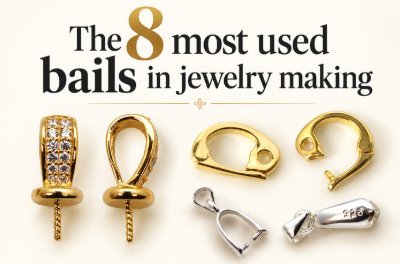
Bails connect pendants to necklaces and come in a variety of styles to suit different designs. Choosing the right bail depends on your pendant’s shape, hole placement, and size, as well as the chain or cord you plan to use.
Here are eight commonly used types of jewelry bails and tips for choosing each one.
1. Snap-on Bail (Tension Style)
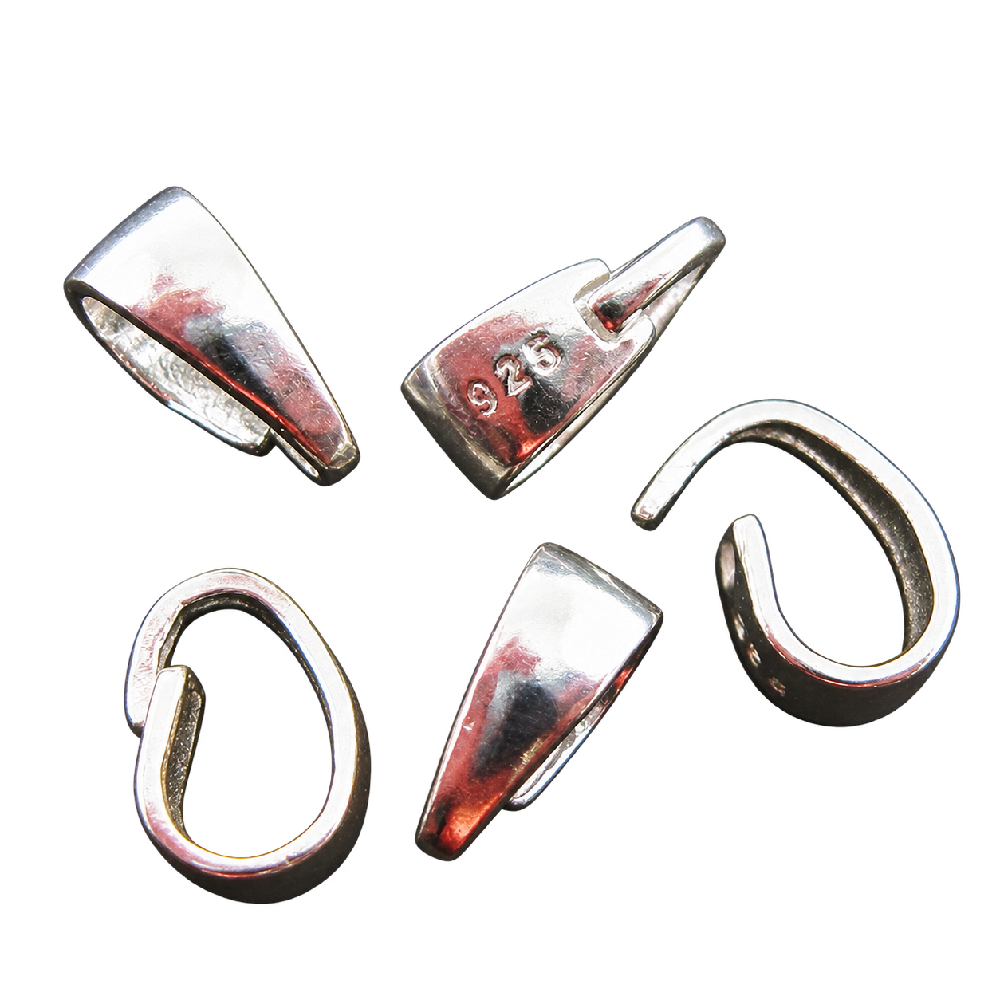
The snap-on bail uses the tension of the metal to keep the opening closed. Gently push it open, slip the pendant onto it, and release it. The opening returns to its closed position, making this one of the simplest and easiest bail styles to use.
2. Bail with Ring
This type of bail has an open or closed ring for attaching a charm, pendant, or other component. The ring is often hidden behind a decorative front for a clean, finished look.
An open ring can connect directly to a pendant’s hole or loop. A closed ring may require a separate jump ring to attach the pendant.
https://www.azfindings.com/wholesale-sterling-silver-simple-hook-bail-connector-wholesale-findings
3. Pinch Bail
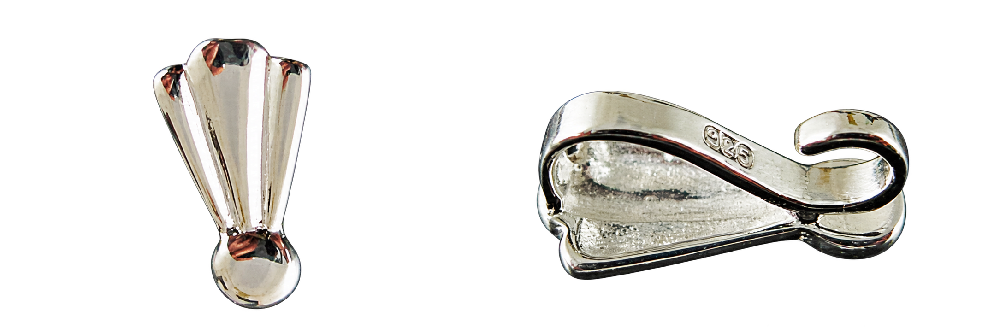
A pinch bail has two inward-facing pegs that fit into opposite ends of a hole drilled through the top of a gemstone or briolette. Gently squeezing the bail brings the pegs into place and secures the stone.
When choosing a pinch bail, check two measurements:
- Opening width: The bail must open wide enough to accommodate the thickness of your stone.
- Inside clearance: The distance from the pegs to the inside top of the bail must provide enough room for the portion of the stone above its drilled hole.
Depending on the design, pinch bails can be attached using your fingers or a pair of flat-nose pliers. Apply gentle pressure to avoid damaging the stone or bending the bail out of shape.
https://www.azfindings.com/925-sterling-silver-long-teardrop-pinch-bail-connector-16mm-2-pcs

4. Peg Bail
A peg bail has a single peg extending from the bottom and is designed for half-drilled pearls or gemstones. The peg may be smooth or ridged and is secured inside the drilled hole with a suitable jewelry adhesive.
Choose a peg with a length and diameter that fit the hole properly. It should slide into the hole without forcing and allow the pearl or stone to sit neatly against the bail.
A ridged peg can help the adhesive grip, but a snug fit alone does not replace adhesive. Follow the adhesive manufacturer’s instructions and allow it to cure fully before wearing the finished piece.

5. Glue-on Bail
As the name suggests, a glue-on bail attaches to a pendant with adhesive. Unlike a peg bail, it has a flat bonding surface instead of a peg.
This style works well with flat-backed gemstones, cabochons, and other pendants that do not have a drilled hole.
Use a jewelry adhesive suitable for both materials. Make sure the bonding surfaces are clean and dry, and follow the manufacturer’s instructions for application and curing.

6. Hinged Bail/Pendant Enhancer
A hinged bail opens and closes without tools, making it easy to attach, remove, or change pendants. It is a useful option for interchangeable jewelry designs.
The closure varies by style. Some designs use a hinge and snap closure, while others use a clip or magnetic mechanism.
Before choosing one, check that its opening and attachment point are compatible with your pendant, chain, or strand of beads. Make sure the closure is fully secured before wearing it.

7. Tube Bail
A tube bail has a hollow tube through which a cord or chain passes. A loop at the bottom provides an attachment point for a pendant.
This style is especially useful for leather cord necklaces. When choosing a tube bail, check that its inside diameter accommodates your cord or chain. If you are using a finished chain, remember that the end fitting may also need to pass through the tube.
For less movement along a cord, choose a combination that creates a snug fit without forcing the cord through the tube.
https://www.azfindings.com/925-sterling-silver-round-ribbon-bail-1-pc

8. Screw-on Shaft Bail
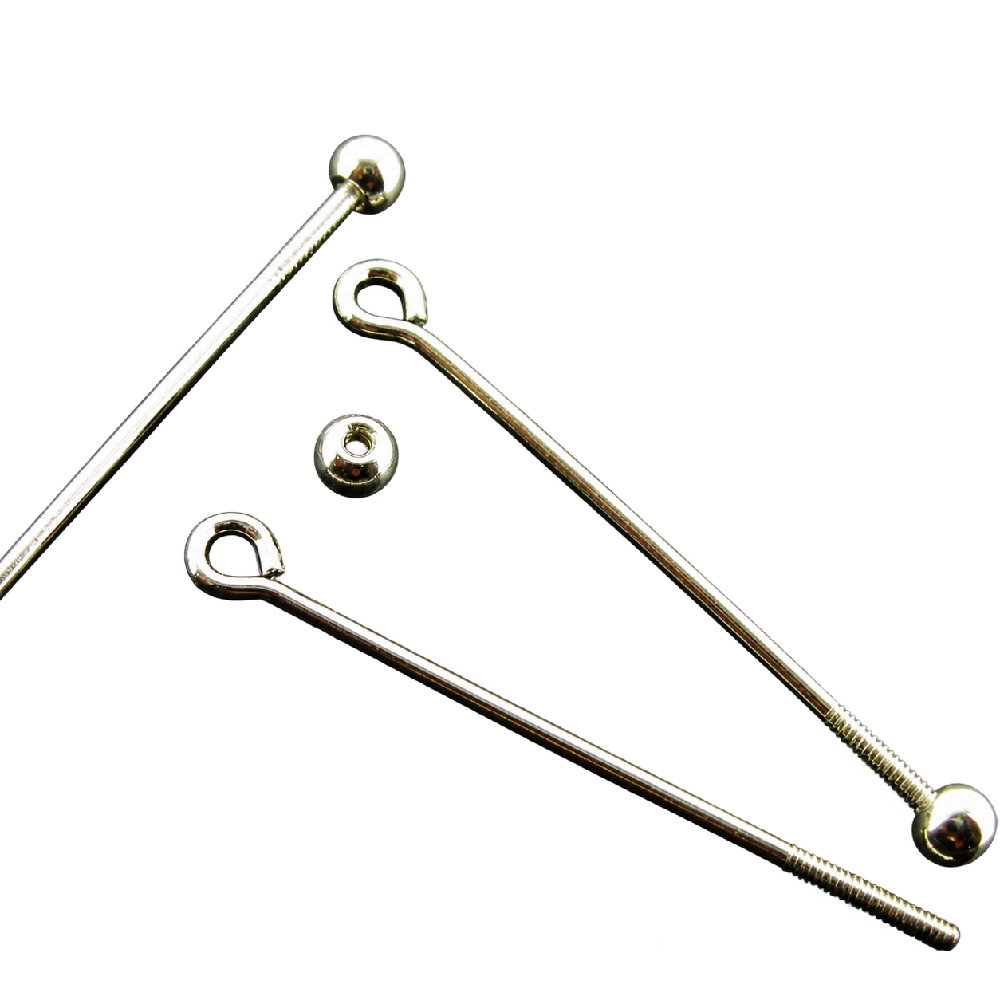
A screw-on shaft bail consists of a long pin with a loop at one end and a removable screw-on ball at the other.
Unscrew the ball, slide one or more beads onto the shaft, and screw the ball back into place to secure them. Check that the bead holes fit the shaft and that the beads leave enough room to reattach the ball securely.
Thread a chain through the top loop to create a pendant, or make a matching pair and attach them to ear wires for earrings.

Comments